David Miller Interview: How Exploring Your Inner Child Can Improve Your Photography

David Miller

David Miller is a photographer influenced by the 1980s, absorbed with its cultural landmarks: from golden age Hip-hop, the Muppets, and Star Wars to Japanese imports of Akira and Fist of the Northstar. Not surprisingly, Miller’s work explores how these collages of images, sounds, and styles can be pulled for ideas and inspiration, or reconfigured into completely new forms.

He calls his approach Surreal Pop. He thinks it reflects the mentality of a kid who grew up in the 80s. Whether you grew up in the 80s or not, Miller’s work has an ability to stun. He has been published in Orion, View Camera and B+W/ Color. Besides his commercial work and personal projects, he has also taught photography for the Mesa Arts Center and City of Chandler.

In this interview, Miller gives an insightful look into how he develops his photo shoots, explains his method for working with those big 4×5 cameras, and why his childhood influences help his work.

Read the rest of this entry »

Underwater Look into New Cameraphone Commerical

There’s a new cameraphone out there that can supposedly take photos underwater. It’s called the Sony Xpheria ZR . . . and all I can say is: it’s about time and that’s a cool name I guess. But whatever happend to those bulky, disposable containers of a camera. With their bright orange knobs, sturdy plexiglas, and hot yellow wrist straps…?

Well here’s a BTS video of a recent commercial promoting the new cameraphone. It was posted by commercial photographer Jeffery Richt – who shot the advert. And besides showing how some of the scenes were shot and edited together, it also features a nice little groove of a song.

SONY ZR Photo shoot – Behind The Scenes from Jeffery Richt on Vimeo.

Learn to Create (Fake) Shallow Depth of Field in Photoshop

Here’s another great tutorial from Youtube. This time, you will learn how to create a shallow depth of field through post-processing. For all those times when you didn’t have time, patience, or the right f-stop, necessary to do it in-camera. Like always expected from the guys at Phlearn, the tutorial is simple to follow, and every step is shown–from which tools are utilized to the techniques required in Photoshop.

And although the trick isn’t quick, it is a good thing to know when must change your depth of field and it’s too late for anything else.

Against Fleeting Memory: Four Generations of Daughters Captured in One Unedited Portrait

Recording, whether onto tape, video, or photograph, is conceivable to nearly everyone alive now. That’s why when I found this video I was positively overcome. Four generations of beautifully inspiring women captured within one single portrait. The great-grandmother 101, the grandmother 79 and the youngest 29. Talk about heartwarming, it is nice to see the internet come up with videos like these and photographers like Chamonix Thurston-Rattue imagining a concept like it.

Since we all know nothing is guaranteed, at least there will be a photograph, somewhere, someplace holding us through time. Our voice or image translated into digital ones and zeros outlasting the chaos of memory and guarding what’s precious (thundering piano music).

101 Years of Beauty — Four Generations from Chamonix Thurston-Rattue on Vimeo.

BTS Look Into the Work of Cityscape Photographer Brian Matiash

F-stop gear has a really neat series going on. It’s called Life in Focus, and features some of their professional photographers speaking about their work/creative biographies. In this gorgeous video, they feature cityscape photographer and HDR lover Brian Matiash.

In it, Brain explains why he prefers HDR to single exposure photography. How he went from being jobless in New York to being paid as a photographer in Portland. And–at least to me–reveals a new (or obscure) form of photography: taking photos of abandoned and ruined structures.

Be sure to check out the rest of videos in the series.

Life in Focus E02 – Brian Matiash from f-stop || Gear on Vimeo.

Daring Photographer Speaks about Shooting Volcanoes

Have you ever taken a photo next to a volcano? I haven’t. Pretty sure it’s kinda easy though. All you would really need is sunglasses. Right? You know so when your friends are taking photos of you taking photos of lava, you look cool enough for facebook. I’m pretty sure that’s all that’s needed. Forget about instructions. Or danger. Or that as landscape photographer Miles Morgan points out: there is no truly safe spot next to a volcano.

I wish it was that easy, but it’s not. In this video, Morgen talks about how hard it really is to shoot next to blazing hot volcanoes. He also gives some insight into what it takes and what one must learn if you ever decide to go out and do it too.

And please . . . if you ever do go out there, be safe!

Anthony Neste Interview: Taking Pictures of the Most Beautiful Women in the World

Anthony Neste

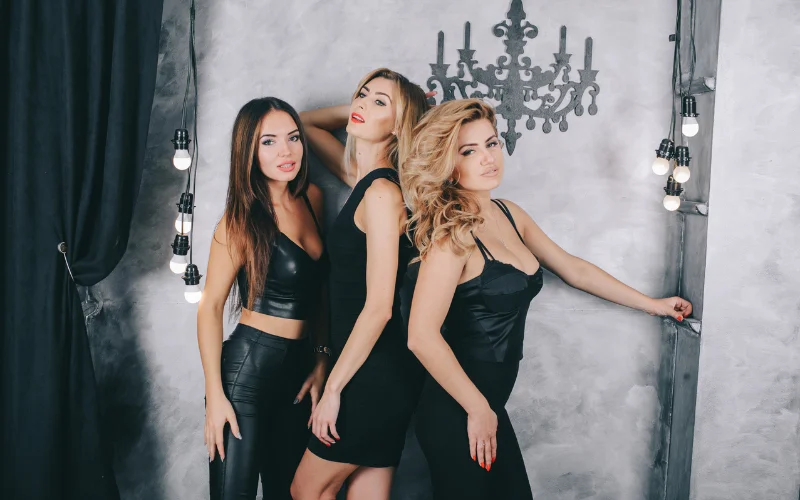
Anthony Neste has been a photographer for many years. He started off taking sports photography and then he took photos for networks like HBO. Nowadays, he’s shooting beautiful women.

I first came across Anthony Neste on Model Mayhem where I marvelled at the great photographs and beautiful women he’s worked with.

Neste happens to also be a great photography educator. After talking with him I learned a TON. Make sure to check out his workshops.

Anthony is also featured in The Beauty Collective, a FREE e-book that has tips from several top beauty/fashion/glamour photographers. Get it now.

Read the rest of this entry »

A Time-Lapse that Will Help You Relax

If you’re stressed out from the daily grind. From having too much on your plate, or simply from all the emails and facebook status updates. Here’s a video that will help you relax, and most definitely inspire you. It was created by photographer Shawn Malone in Northern Michigan over the course of a year.

He took more than 10 thousand images of the dark skies around his home to complete it. And the result is beautiful. The images (best viewed full-screen and with the room dark as midnight) work with the accompanying music to create a truly relaxing experience–’oceanic’ would be another way of describing it.

Share with all your stressed out photographer friends!

North Country Dreamland from LakeSuperiorPhoto on Vimeo.

Erica Coburn Interview: Working with the Most Striking & Naturally Beautiful Girls in Ireland

Erica Coburn

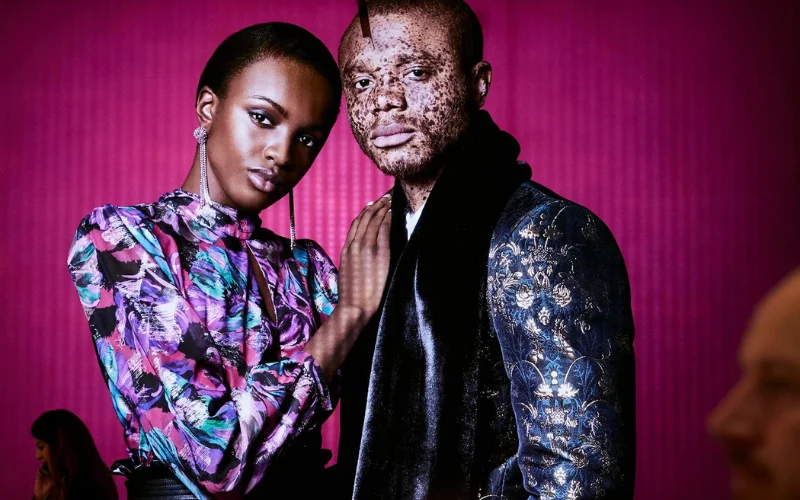
I first saw Erica Coburn’s work on Flickrista and was immediately drawn to its painterly qualities. When I asked her to describe her own work Coburn called it, ethereal, surreal, and delicate. I would add something else: precocious. I would’ve never guessed that these photographs were the work of an 18 year old. Or that Dublin based Coburn has only been into photography for a few years. The images I saw were lush, the lighting soft, and the mood, sombre. They seemed too focused for someone, technically, still beginning.

But as is well known, age doesn’t matter. What matters is the final image, and the dedication. The work will speak for itself–everything else is inconsequential. And Coburn’s work has been speaking, she has won several awards and has been featured on Italian Vogue. Not a bad start to what seems like a promising career.

In this interview, Coburn explains how she got her start in photography, gives an overview of her post-processing techniques, and explains why she loves to shoot in natural light.

Read the rest of this entry »

A Visual History of Photographic Printing Processes

After interviewing fine art photographer James Weber I became very interested in the mechanics of his wet plate cameras. The photographs he made in this fashion were very unique and highly captivating. I wanted to know more about this process and its history.

So I researched a bit and found this video from George Eastman House. It is one video of a 6 part series about the history of photographic printing processes–from the Daguerreotype to 20th century’s gelatin silver print. Each video is highly informative and not too long. And all of them cover how each process was invented and why they became popular.

And although this video of the collodion process is my favorite, all 6 videos are sure to make anyone just a little bit smarter about the history of photography.